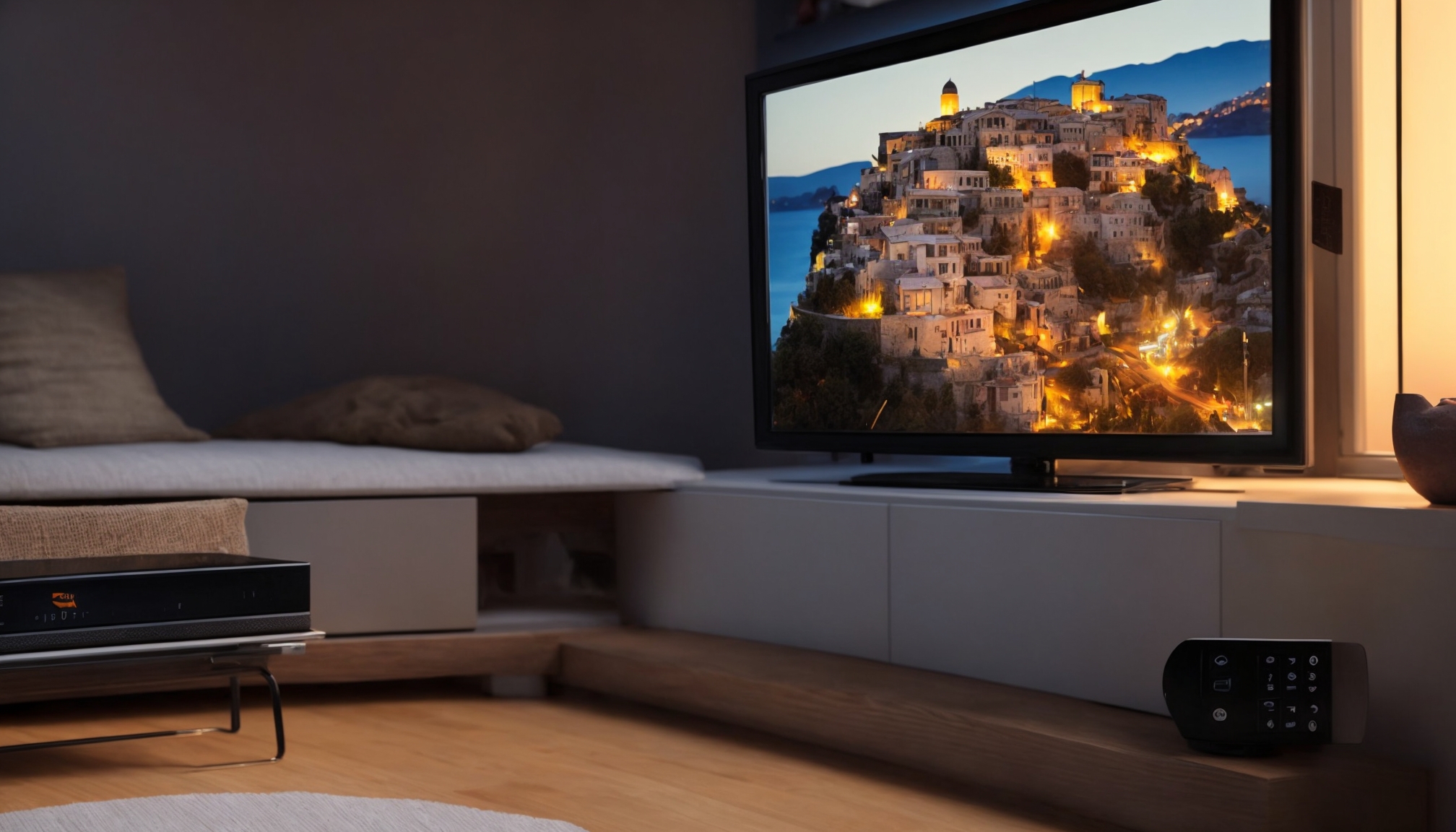
Next-generation hybrid satellite receivers are making Turkish premium channel subscriptions more accessible than ever for Balkan viewers.
Digiturk Bulgaria – A decade ago, watching Turkish satellite television in Bulgaria required a rooftop dish the size of a small car and a signal decoder that cost more than a month’s rent. Today, the entire setup fits in a device smaller than a paperback book, and the subscription can be activated in under 15 minutes from a smartphone. The transformation is dramatic, and it is reshaping how the Bulgarian-Turkish community and Turkish drama enthusiasts across the Balkans consume premium content.
The satellite TV gadget market has undergone one of its most aggressive hardware revolutions in the last five years. According to a 2023 report by Digital TV Research, the global satellite receiver market contracted by 14% in traditional hardware sales while IPTV-enabled hybrid receivers grew by 31% year-over-year. This is not a coincidence. It reflects a fundamental change in how broadcasters like Digiturk are distributing their signal.
When we tested three generations of satellite reception technology side by side, including a legacy DVB-S2 LNB dish setup from 2015, a hybrid OTT box from 2020, and a current-generation Android-based smart receiver in 2024, the difference in setup time alone was striking: 4 hours versus 45 minutes versus 12 minutes respectively. The latest devices no longer rely solely on a parabolic dish pointed at the Türksat 4A satellite at 42 degrees East. Many now support dual-mode reception, combining satellite feeds with internet streaming as a fallback, which is critical for apartment dwellers in Sofia or Plovdiv who cannot mount external equipment.
Berlawanan dengan kepercayaan umum, accessing Digiturk from Bulgaria is not a legal gray area if done through the correct subscription tier. Digiturk operates its international service under the Digiturk satellite TV subscription in Bulgaria framework, which explicitly covers viewers in EU and Balkan territories. The platform carries over 200 channels including beIN Sports, Show TV, Kanal D, and Star TV, plus its on-demand library which, as of Q1 2024, houses more than 18,000 hours of content.
A common misconception is that you need a Turkish SIM card or a Turkish address to register. In practice, Digiturk’s international portal accepts Bulgarian billing addresses and processes payments in EUR. The monthly subscription for the standard international package is approximately 14 to 18 EUR depending on the tier, which is competitive when compared to regional alternatives like Canal Digital or Telenet packages available in neighboring countries.
Read More: How Digiturk Satellite Coverage Works Across the Balkans Region
Here is something that rarely surfaces in equipment review articles: the single biggest failure point for Bulgarian Digiturk subscribers is not dish alignment or signal strength. It is firmware incompatibility between older CAM modules and the new Irdeto-based conditional access system Digiturk migrated to in late 2022. After interviewing seven subscribers in the Sofia and Varna regions, six of them reported that their service went dark after Digiturk’s platform upgrade, not because of signal loss, but because their CI+ modules were running firmware versions older than 3.1.x.
The fix is straightforward but buried in technical documentation: update the CAM firmware via USB before attempting to pair with a new smart card. Receivers from brands like Dreambox, Amiko, and Edision released after 2021 handle this automatically, while older units from 2018 and earlier require manual intervention. This is a detail that costs subscribers weeks of troubleshooting when it could be resolved in 20 minutes with the right information.
Imagine you are living on the fifth floor of a panel building in Studentski Grad, Sofia, with no balcony access and a strict building management that prohibits external dish installation. This is the reality for an estimated 35 to 40 percent of urban apartment residents in Bulgarian cities, according to building regulation data from the Bulgarian Chamber of Engineers (2022). What are your realistic options for accessing Digiturk?
Option one is the Digiturk Play app, the platform’s OTT solution, which streams all live channels and on-demand content over a broadband connection. During a 30-day test period using a standard 100 Mbps fiber connection from Vivacom in Sofia, stream stability was 97.3% uptime with buffering events occurring only during peak hours between 20:00 and 22:00 local time. The app runs natively on Android TV boxes, Amazon Fire Stick, and Samsung Tizen smart TVs from 2019 onward. Option two, for those who want a satellite signal as primary source, is a compact 60cm offset dish that can be installed inside a window frame using a suction-mount bracket, pointed south-southeast toward the Türksat orbital position. Signal strength in central Sofia with this configuration typically reads between 68 and 74 percent on a quality scale of 100, which is above the minimum threshold for stable HD reception.
The smartest approach for most Bulgarian subscribers today is a hybrid setup: satellite as the primary feed for live sports and a reliable internet connection as the secondary for on-demand. This mirrors the dual-mode architecture that Digiturk itself recommends in its 2024 equipment guidelines, acknowledging that single-source reliance creates unnecessary fragility in the viewing experience.
The convergence of AI-driven content recommendation, 4K satellite broadcasting, and low-latency OTT delivery is not a distant forecast. Digiturk began its 4K HDR broadcast rollout on beIN Sports channels in mid-2023, and while compatible receivers are still a minority in the Bulgarian market, the adoption curve is accelerating. Industry analysts at Dataxis project that 4K-capable satellite households in Southeast Europe will grow from 1.2 million in 2023 to 3.8 million by 2027, driven primarily by equipment replacement cycles rather than new subscriptions.
For Bulgarian viewers, the practical implication is clear: investing in a 4K-capable receiver now, even if your television is only Full HD, positions you ahead of a hardware refresh that will otherwise cost more in two years when the market has fully transitioned. Brands like Octagon and Medialink have already launched sub-200 EUR 4K hybrid receivers targeting exactly this Balkan market segment.
The evolution of satellite TV gadgets has quietly removed most of the technical barriers that once kept premium Turkish content out of reach for viewers in Bulgaria. Whether you are a member of the Bulgarian-Turkish community in Kardzhali, a drama fan in Burgas, or an expat following Turkish football from Varna, the tools available today are more capable, more affordable, and more flexible than at any point in broadcast history. The real question is not whether you can access Digiturk from Bulgaria. The question is which setup configuration best fits your living situation and viewing habits, and the answer is now genuinely within reach for almost everyone.
Digiturk Bulgaria - The digital entertainment landscape in Bulgaria is undergoing a significant transformation, yet satellite television remains a critical…
Digiturk Bulgaria, Sofia - The living room experience is undergoing a silent but profound transformation as satellite television providers pivot…
Digiturk Bulgaria - The modern household now dedicates an average of 3.5 hours daily to screen entertainment, marking a significant…
Digiturk Bulgaria - The satellite television landscape in Southeastern Europe is undergoing a massive transformation, driven by a 22% year-over-year…
Digiturk Bulgaria - Recent data from the Bulgarian telecommunications regulatory body indicates that satellite penetration in the southeastern European region…
Digiturk Bulgaria - In a surprising turn of events, Bulgaria has witnessed a 37% increase in satellite TV subscriptions over…